
swat room clearing tactics pdf
SWAT team operations demand specialized techniques, often documented in detailed manuals, for safely resolving high-risk situations․ These techniques, evolving over decades, prioritize officer safety and tactical success․
Early deployments focused on barricaded suspects, but expanded with active shooter events, necessitating refined room-clearing protocols․ The Lorena Lopez incident (2005) and Jacksonville Shooting (2008) highlight the need for continuous improvement․
Framingham Police’s recent SWAT truck acquisition demonstrates ongoing investment in capabilities, while training, like CrossFit-based workouts, prepares operators for physical demands․
Historical Context of SWAT Teams
SWAT teams emerged in the 1960s, responding to increasing urban unrest and a need for specialized police responses beyond conventional methods․ Initially focused on barricaded suspects – like the 2008 Boston officer barricade – their role expanded dramatically with evolving threats․
The 2005 Lorena Lopez incident underscored the complexities of tactical decision-making, prompting scrutiny of existing techniques․ Jacksonville’s 2008 shooting further emphasized the need for rigorous training and adaptable strategies․ Early manuals focused on containment, evolving to dynamic entry protocols․
The Evolution of Room Clearing Tactics
Early SWAT room clearing techniques prioritized controlled entries and methodical searches, often documented in evolving manuals․ Incidents like the 2005 Lorena Lopez case spurred revisions, emphasizing de-escalation and minimizing civilian casualties․ The Jacksonville (2008) shooting highlighted the need for rapid response protocols․
Modern tactics integrate dynamic entry with deliberate approaches, influenced by real-world scenarios and continuous training․ CrossFit-style workouts prepare operators for the physical demands, while ongoing analysis of incidents informs procedural updates․

Essential Equipment for SWAT Room Clearing
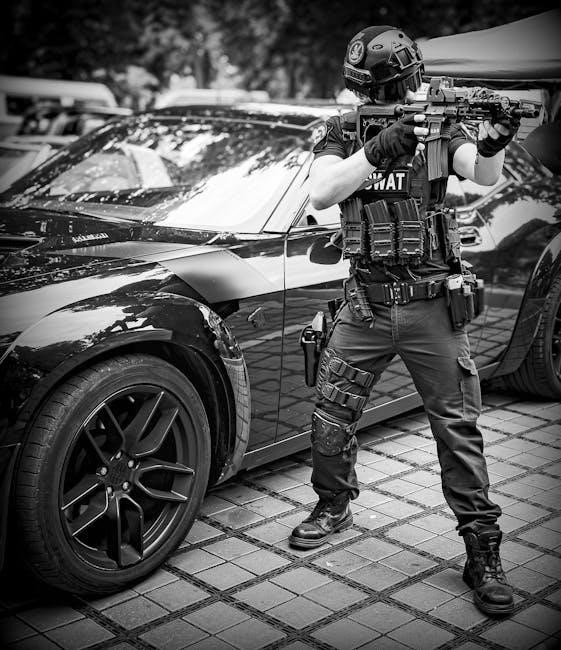
SWAT operators require specialized gear, including firearms, ballistic protection, and breaching tools․ These items, detailed in manuals, ensure safety and effectiveness during high-risk operations․
Acquiring resources, like Framingham Police’s new truck, demonstrates commitment to equipping teams for dynamic situations and tactical responses․
Firearms and Accessories
SWAT teams typically employ rifles, often with optics and tactical lights, alongside sidearms for close-quarters engagements; Shotguns are crucial for breaching doors, as described in operational manuals․
Accessories like laser aiming devices and suppressors enhance precision and tactical advantage․ Proper maintenance and proficiency with these tools, alongside rigorous training, are paramount for safe and effective room clearing․
Protective Gear: Ballistic Vests and Helmets
SWAT operators rely on high-level ballistic vests and helmets to mitigate risks during dynamic entries, as detailed in manuals outlining safety protocols․ These protective measures are essential given the high-threat environments encountered․
Helmets often incorporate communication systems and mounting points for lights or cameras․ Proper fit and regular inspection of gear are critical for ensuring maximum protection and operational effectiveness․
Breaching Tools: Shotguns, Rams, and Hydraulic Spreaders
SWAT teams utilize specialized breaching tools, covered in manuals, to gain rapid entry into structures․ Shotguns with breaching rounds, manual and hydraulic rams, and spreaders are common․ Tool selection depends on door construction and tactical considerations․
Effective breaching minimizes risk to operators and bystanders, requiring extensive training and adherence to established protocols․ Careful planning and execution are paramount for success․
Fundamental Room Clearing Principles
SWAT manuals emphasize limited penetration, exposure control, and methodical room assessment․ Techniques like “slicing the pie” maximize visibility while minimizing risk during dynamic entries․
Clear communication is vital for coordinated movement and threat identification, ensuring operator safety and mission success․
Limited Penetration and Exposure
SWAT manuals prioritize minimizing an operator’s time within a doorway or opening, reducing vulnerability to immediate threats․ This technique, termed “limited penetration,” involves quickly assessing the initial threat and moving to cover․
Exposure control dictates maintaining a low profile and utilizing available cover during entry and clearing, as highlighted in training exercises․ Reducing exposure significantly enhances officer safety during high-risk operations․
Slicing the Pie: A Tactical Approach
“Slicing the pie” is a core technique detailed in SWAT manuals, involving incrementally exposing oneself to a room while observing its contents․ Operators methodically reveal portions of the space, gaining visual information with minimal risk․
This methodical approach, crucial for threat assessment, allows for informed decision-making before full entry․ It’s a fundamental element of deliberate room clearing, prioritizing safety and tactical advantage․
Communication Protocols During Entry
Clear, concise communication is paramount during SWAT room clearing, as outlined in training manuals․ Standardized terminology ensures all team members understand commands and observations, minimizing confusion during dynamic entries․
Operators relay critical information – “clear,” “contact,” or identifying threats – instantly․ Effective protocols, honed through exercises, are vital for coordinated movement and rapid response to evolving situations․

Room Clearing Formations
SWAT teams employ diverse formations – single-file, diamond, stacking – detailed in manuals, adapting to room layouts and threat assessments․ These tactics prioritize control and officer safety․
Proper formation selection, coupled with coordinated entry techniques, maximizes tactical advantage and minimizes risk during high-stakes operations․
Single-File Formation
Single-file is a basic SWAT formation, often used in narrow hallways or confined spaces, as outlined in training manuals․ It offers linear control, allowing operators to quickly address immediate threats․ However, it presents vulnerabilities due to limited fields of view and concentrated exposure․
Effective communication and precise movement are crucial in this formation, ensuring each officer covers the preceding one and maintains situational awareness․ It’s a foundational tactic for initial entry and methodical clearing․
Diamond Formation
The Diamond Formation, detailed in SWAT manuals, provides 360-degree security, ideal for open areas or when anticipating threats from multiple directions․ The point officer leads, with team members positioned at the corners, maximizing observation and firepower․
This formation demands exceptional communication and coordination, as operators must constantly adjust to maintain the diamond’s integrity․ It’s often employed during deliberate entries and complex searches․
Stacking and Entry Techniques
Stacking, a core SWAT tactic outlined in training manuals, involves positioning operators tightly at a doorway, preparing for rapid entry․ Proper stacking minimizes exposure and maximizes control during the breach․
Entry techniques range from dynamic (explosive) to deliberate (slow and methodical), dictated by intelligence and risk assessment․ Successful entries require synchronized movement and clear communication․

Dealing with Common Room Clearing Scenarios
SWAT manuals detail responses to hostage situations, active shooters, and barricaded suspects, emphasizing de-escalation when possible, but preparing for dynamic threats․
Officer safety remains paramount, requiring adaptable techniques and rapid decision-making, as seen in real-world incidents like the Boston Police Officer Barricade (2008)․
Clearing Rooms with Hostages
SWAT manuals prioritize hostage survival during room clearing, demanding slow, deliberate movements and constant communication․ Techniques focus on isolating the suspect while minimizing risk to hostages, often utilizing less-lethal options․
Intelligence gathering is crucial; understanding the suspect’s motivations and hostage placement informs tactical decisions․ The Lorena Lopez case underscores the complexities and potential for tragic outcomes, necessitating meticulous planning and execution․
Operators must balance speed with precision, adapting techniques based on evolving circumstances․
Responding to Active Shooters
SWAT manuals emphasize rapid deployment and direct engagement when responding to active shooter events, prioritizing neutralizing the threat․ Techniques involve dynamic entry and immediate threat assessment, often bypassing traditional room-clearing protocols․
Operators must quickly locate and engage the shooter, providing immediate aid to victims․ Training, like CrossFit-based workouts, prepares them for the physical demands of a fast-paced, high-stress scenario․
Effective communication and coordination are paramount․
Handling Barricaded Suspects
SWAT manuals detail a phased approach to barricaded suspects, prioritizing containment and negotiation․ Initial actions focus on establishing a perimeter and gathering intelligence․ Techniques involve controlled entry, utilizing breaching tools when necessary, and minimizing risk to officers and civilians․
The Ustun Atac case (2007) illustrates the importance of patience and negotiation․
Should negotiations fail, dynamic entry may be employed, demanding rigorous training and tactical precision․

Legal Considerations and Use of Force
SWAT operations require strict adherence to legal standards regarding entry and force․ Manuals emphasize justification, de-escalation techniques, and thorough documentation post-incident, ensuring lawful and accountable actions․
Understanding Legal Justification for Entry
SWAT team entries demand clear legal grounds, typically requiring probable cause supported by oath or reasonable suspicion for exigent circumstances․ Manuals detail permissible justifications, including imminent threats, preventing destruction of evidence, or pursuing fleeing felons․
Officers must articulate specific facts justifying entry, avoiding general assumptions․ The Lorena Lopez case underscores scrutiny of tactical decisions and legal compliance during dynamic operations, emphasizing the need for meticulous documentation․
De-escalation Techniques and Alternatives
SWAT manuals increasingly emphasize de-escalation, prioritizing communication and crisis intervention before force․ Techniques include verbal persuasion, utilizing negotiators, and employing less-lethal options when feasible․
Alternatives to dynamic entry, like prolonged observation or surrendering opportunities, should be explored․ The Boston Police Officer Barricade (2008) highlights the value of patience and negotiation, minimizing risk to all involved․
Post-Incident Procedures and Documentation
SWAT manuals mandate thorough post-incident procedures, including detailed documentation of actions, use of force justification, and evidence preservation․ This meticulous record-keeping is crucial for legal defensibility and internal reviews․
Cases like Lorena Lopez (2005) underscore the importance of transparent investigations․ Accurate documentation aids analysis, identifies areas for improvement, and ensures accountability following high-risk operations․
Training and Qualification for SWAT Operators
SWAT operator training emphasizes physical fitness, tactical decision-making, and live-fire scenarios․ Agency tryouts often incorporate CrossFit-style workouts to assess candidate endurance and resilience․
Continuous learning, referencing manuals, and adapting to evolving threats are vital for maintaining operational readiness and proficiency in room-clearing techniques․
Physical Fitness Standards
SWAT operator physical fitness is paramount, demanding exceptional strength, endurance, and agility for dynamic entry and sustained operations․ Tryouts frequently utilize CrossFit-based workouts, testing candidates’ capacity under stress․
These rigorous standards ensure operators can effectively employ room-clearing techniques, manage heavy gear, and maintain performance during prolonged engagements․ Consistent training, mirroring real-world demands, is crucial, as detailed in manuals․
Tactical Decision-Making Exercises
SWAT training heavily emphasizes rapid, accurate decision-making under pressure, vital for successful room clearing․ Scenarios simulate high-stress encounters, forcing operators to assess threats and adapt techniques accordingly․
These exercises, often outlined in training manuals, test judgment regarding use of force, hostage situations, and evolving intel․ Proficiency in these skills minimizes risk and maximizes operational effectiveness, mirroring real-world complexities․
Live-Fire Training Scenarios
SWAT operators require rigorous live-fire drills to validate techniques and build proficiency in dynamic room clearing․ These scenarios, detailed in training manuals, replicate realistic conditions, demanding precision and tactical awareness․
Exercises assess weapon handling, communication, and team coordination under stress, mirroring potential encounters like the Boston Police Officer Barricade (2008)․ Such training is crucial for safe and effective operations․
Analyzing Real-World SWAT Operations
SWAT operations, like the Lorena Lopez (2005) and Jacksonville (2008) incidents, provide critical lessons for refining techniques․ Post-incident analysis informs manual updates and training protocols․
Examining these events highlights the importance of adaptable tactics and effective communication during high-risk scenarios․
Case Study: Lorena Lopez Incident (2005)
The 2005 shooting involving Suzie Pena sparked debate regarding SWAT techniques and the use of force․ Lorena Lopez, the mother, questioned the tactics employed during the gunbattle, advocating for alternative approaches․ Manual reviews followed, emphasizing de-escalation and risk assessment․
This case underscores the critical need for thorough pre-entry planning, intelligence gathering, and adaptable strategies when confronting barricaded suspects or volatile situations․
Case Study: Jacksonville Shooting (2008)
In 2008, a Jacksonville carjacking and subsequent SWAT standoff culminated in an officer-involved shooting, leaving the suspect critically wounded․ This incident highlighted the rapid escalation potential of seemingly routine calls and the importance of dynamic risk assessment․
The event prompted reviews of pursuit protocols and techniques for engaging suspects following high-speed chases, reinforcing the need for comprehensive training and adherence to established manual guidelines․
Case Study: Boston Police Officer Barricade (2008)
In December 2008, a Boston police officer barricaded themselves within a residence, triggering a SWAT team response․ The situation demanded careful negotiation and tactical positioning, emphasizing the complexities of dealing with potentially suicidal individuals․
Metro SWAT teams secured the scene, utilizing established techniques detailed in operational manuals, to ensure both officer safety and the officer’s well-being, showcasing crisis intervention protocols․

The Role of Intelligence in Room Clearing
Effective room clearing relies heavily on pre-entry intelligence gathering and reconnaissance, informing tactical decisions․ SWAT manuals stress adapting techniques based on surveillance and information․
Understanding the layout and potential threats minimizes risks, mirroring approaches used in the Boston Police Officer Barricade (2008) and other incidents․
Pre-Entry Planning and Reconnaissance
Thorough pre-entry planning, detailed in SWAT manuals, is paramount․ This involves comprehensive reconnaissance, utilizing all available intelligence to map the target location and identify potential threats․ Analyzing floor plans, understanding entry points, and assessing possible barricade positions are crucial steps․
Intelligence gathering informs the selection of appropriate techniques, minimizing risks to officers and bystanders․ Cases like the Lorena Lopez incident underscore the importance of accurate information before deployment․
Utilizing Surveillance and Information Gathering
Effective surveillance, a cornerstone of SWAT operations detailed in training manuals, provides critical insights․ This includes observing the target location, identifying occupants, and noting patterns of life․ Information gathering extends to background checks and leveraging confidential informants․
Real-world cases, such as the Boston Police Officer Barricade (2008), demonstrate how intel shapes tactical decisions and minimizes unforeseen complications during dynamic entry scenarios․
Adapting Tactics Based on Intel
SWAT teams must dynamically adjust room-clearing techniques based on gathered intelligence, as outlined in comprehensive manuals․ Intel regarding potential hostages, like the Lorena Lopez incident, necessitates a deliberate, cautious approach․
Conversely, active shooter scenarios, such as the Jacksonville Shooting, demand rapid, decisive action․ Continuous assessment and flexibility are paramount for operator safety and mission success․

Advanced Room Clearing Techniques
SWAT manuals detail dynamic versus deliberate entry, utilizing flashbangs for disorientation․ Techniques also encompass close quarters combat (CQC) strategies, demanding rigorous training and adaptability․
Dynamic Entry vs․ Deliberate Entry
Dynamic entry, favored for speed and surprise, overwhelms suspects, but carries higher risk․ Deliberate entry prioritizes information gathering and controlled force, suitable when intelligence is available․ SWAT manuals emphasize assessing threats to select the appropriate technique․
Factors like hostage presence, suspect weaponry, and room layout dictate the chosen approach․ Successful implementation requires extensive training and adherence to established protocols, ensuring officer safety and mission success․
Utilizing Flashbangs and Diversionary Devices
SWAT manuals detail the strategic use of flashbangs and diversionary devices to disrupt suspect focus and create tactical advantages during room clearing․ These tools momentarily incapacitate, allowing for safer entry and control․
Proper deployment, considering room size and occupant positioning, is crucial․ Operators must adhere to strict safety protocols to minimize risk of injury, balancing effectiveness with responsible force application․
Close Quarters Combat (CQC) Strategies
SWAT manuals emphasize techniques for Close Quarters Combat (CQC) within confined spaces during room clearing․ Operators train in rapid decision-making, weapon manipulation, and hand-to-hand combat skills to neutralize threats effectively․
These strategies prioritize control and minimizing collateral damage, often integrating with flashbang deployment for a dynamic advantage․ Continuous training and scenario-based exercises are vital for proficiency․
SWAT Manuals and Resources
Official training manuals detail SWAT techniques, while online resources supplement learning․ Continuous updates are crucial, reflecting evolving tactics and lessons learned from real-world incidents․
Availability of Official Training Manuals
Access to comprehensive SWAT manuals varies significantly depending on agency and jurisdiction․ Many departments maintain internal documents, often not publicly available due to security concerns․ However, some resources, detailing core techniques, may be accessible through law enforcement professional organizations․
Finding a complete “swat room clearing tactics pdf” publicly is unlikely; training is typically delivered through certified instructors and practical exercises․
Online Resources and Training Materials
While a definitive “swat room clearing tactics pdf” is rare online, numerous platforms offer supplemental training․ Websites dedicated to law enforcement provide articles, videos, and discussions on relevant techniques․ Forums, like those discussing SWAT tryouts, share insights into preparation and training methodologies․
However, these resources should complement, not replace, official agency training and certified instruction․
Importance of Continuous Learning and Updates
The dynamic nature of threats necessitates constant refinement of SWAT room clearing techniques․ Relying solely on a static “swat room clearing tactics pdf” is insufficient; tactics must evolve․
Incidents like the Boston Police Officer Barricade (2008) demonstrate the need for adaptability․ Staying current with best practices, new technologies, and lessons learned from real-world operations is crucial for operator safety and effectiveness․

Future Trends in SWAT Room Clearing
Emerging trends include integrating drones and robotics, alongside a greater emphasis on de-escalation and crisis intervention․ Updating the “swat room clearing tactics pdf” will be essential․
Adapting to evolving threats requires continuous learning and technological integration for enhanced safety and operational effectiveness․
Integration of Technology (Drones, Robotics)
Technological advancements are reshaping SWAT operations, demanding updates to the “swat room clearing tactics pdf”․ Drones provide crucial reconnaissance, mapping interiors before entry, minimizing risk․ Robotics offer remote breaching and hostage rescue capabilities, reducing officer exposure․
These tools enhance situational awareness and tactical flexibility, but require specialized training and careful consideration of legal implications․ Successful integration necessitates a shift in mindset and procedural adjustments․
Emphasis on De-escalation and Crisis Intervention
Modern SWAT protocols, reflected in updated “swat room clearing tactics pdf” documents, increasingly prioritize de-escalation․ Crisis intervention training equips operators to manage volatile situations with less-lethal force․ This approach acknowledges the importance of mental health and seeks peaceful resolutions․
While tactical proficiency remains vital, operators are now trained to assess and mitigate threats through communication and negotiation, reducing reliance on force․
Adapting to Evolving Threat Landscapes
Contemporary “swat room clearing tactics pdf” manuals emphasize adaptability․ The rise of active shooter events and increasingly complex scenarios necessitate dynamic strategies․ SWAT teams must now prepare for diverse threats, from barricaded suspects to potential terrorist actions․
Integration of technology, like drones and robotics, is crucial, alongside continuous training and analysis of real-world incidents like the Boston Police Officer Barricade (2008)․

Officer Safety and Risk Management
SWAT manuals, including “swat room clearing tactics pdf” guides, prioritize minimizing exposure․ The buddy system and accountability are paramount for threat mitigation and operator survival․
Buddy System and Accountability
SWAT manuals, like those detailing swat room clearing techniques in pdf format, consistently emphasize the critical importance of the buddy system․ Operators must maintain constant visual or verbal contact, ensuring immediate assistance if compromised․
Accountability procedures, including personnel tracking during dynamic entries, are vital․ This minimizes friendly fire risks and ensures every team member’s location is known, enhancing overall safety and operational effectiveness․